The way we organise work is changing faster than our traditional structures can keep up with.
For years, organisations have been built around jobs. A job description bundles responsibilities, tasks and skills into one relatively fixed package.
The shift towards skills-based organisations already challenges that model. But AI is pushing us one step further.
We increasingly need to look beyond jobs and even beyond skills, towards the atomisation of work.
What is work atomisation?
Work atomisation means breaking work down into smaller, meaningful components: activities, tasks, problems, outcomes and projects.
Instead of asking:
Who has the right job title for this work?
we can start asking:
What needs to be done, which capabilities does it require, and who or what is best positioned to do it?
That changes the possibilities dramatically.
A piece of work might be performed by an employee, someone elsewhere in the organisation, an external professional, an AI agent, or a combination of humans and technology.
The organisation becomes less dependent on fixed jobs and more capable of continuously matching available talent and technology to the work that actually needs to happen.
From workforce planning to continuous matching
This is why we believe traditional workforce planning alone will no longer be sufficient.
When work changes continuously, organisations cannot predict every future job or organisational structure years in advance.
They need the ability to understand:
- what work needs to be done
- which tasks are changing or disappearing
- which new capabilities are emerging
- what people can already do
- what they could learn next
- which work can be supported or performed by AI
- how people, skills, tasks and opportunities can continuously be matched
This is where AI-powered matching becomes part of the operating model of the organisation.
Not just matching candidates to vacancies, but matching people to work, skills to opportunities and human capability to changing organisational demand.
The next conversation: humans, skills, work and AI agents
This autumn, 8vance will be contributing to this conversation at a series of events across Europe.
While every event has its own audience and perspective, the underlying question is increasingly the same:
How do we organise work when jobs are no longer the smallest unit and AI becomes an active participant in getting work done?
You can meet us at:
16 September | Zukunft Personal Europe | Cologne
AI, skills, matching and the future of work.
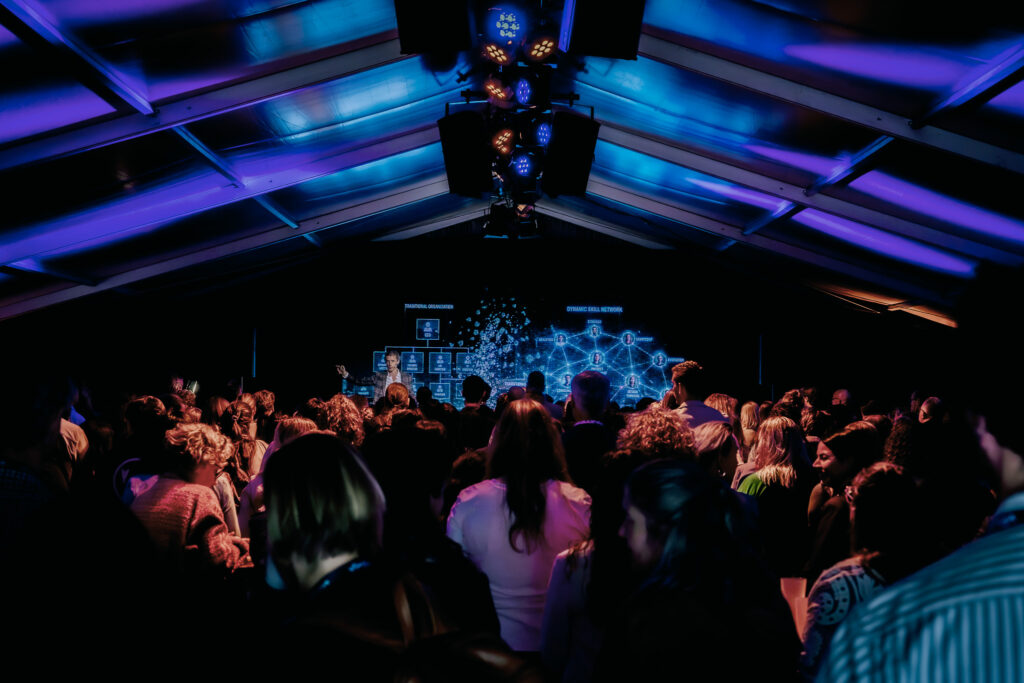
21 September | AI Matching Community | Amsterdam
Together with employers, we explore how AI is changing talent, work and internal mobility.
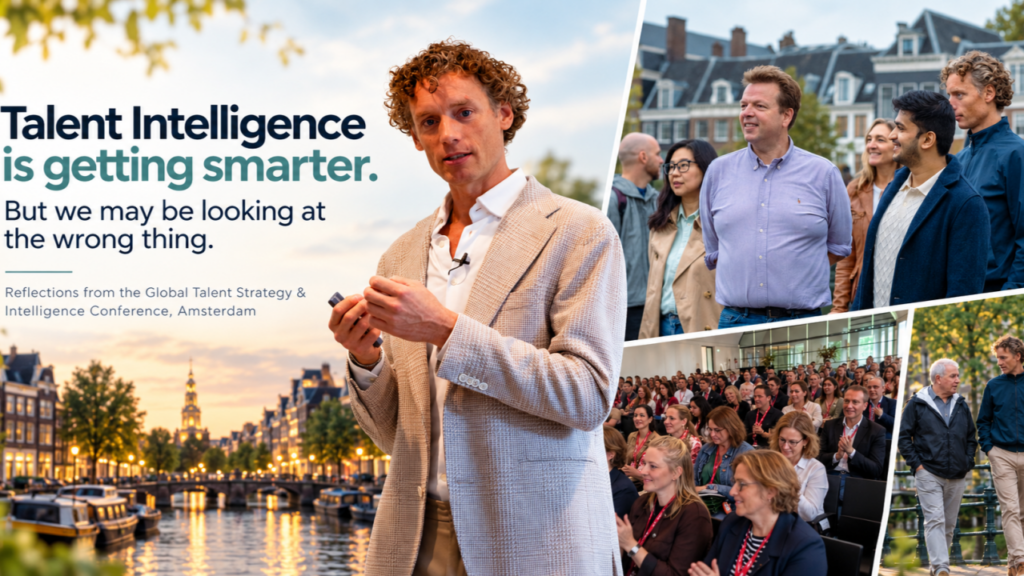
29 September | Global Talent Strategy & Intelligence Conference | Amsterdam
From Planning to Matching | Agentic HR.
6 October | Digitaal Werven | Amersfoort
How AI agents are changing recruitment and the role of recruiters.
20-22 October | UNLEASH | Paris
Skills-Based Organizing in the age of AI.
17 November | People Analytics & AI
Beyond skills, towards continuously understanding people, work and potential.
A new architecture for work
The bigger development behind all these conversations is not simply that AI will automate more tasks.
It is that AI gives organisations the opportunity to redesign how work itself is structured and distributed.
Jobs become more fluid.
Skills become more visible.
Work can be broken into smaller components.
AI agents can take responsibility for parts of the workflow.
And people can increasingly be matched to opportunities based on what they can contribute and develop, rather than only on the position they currently hold.
That requires a new infrastructure for organisations: one that continuously understands work, people, skills, potential and available technology.
At 8vance, this is exactly the transition we are working on.
From jobs to skills.
From skills to tasks and opportunities.
From workforce planning to continuous matching.
And from organisations built around positions to organisations built around the work that needs to be done.
We look forward to continuing that conversation with organisations across Europe this autumn.